
 251-217-9733

Employment & Workforce Management
Most employment claims are decided by what you did months before anyone filed anything.
Employment Counsel, Before the Claim
Employment and workforce management covers the legal side of hiring, managing, and separating from employees (offer letters, handbooks, HR policy, benefits, immigration, restrictive covenants, and the process around a termination).
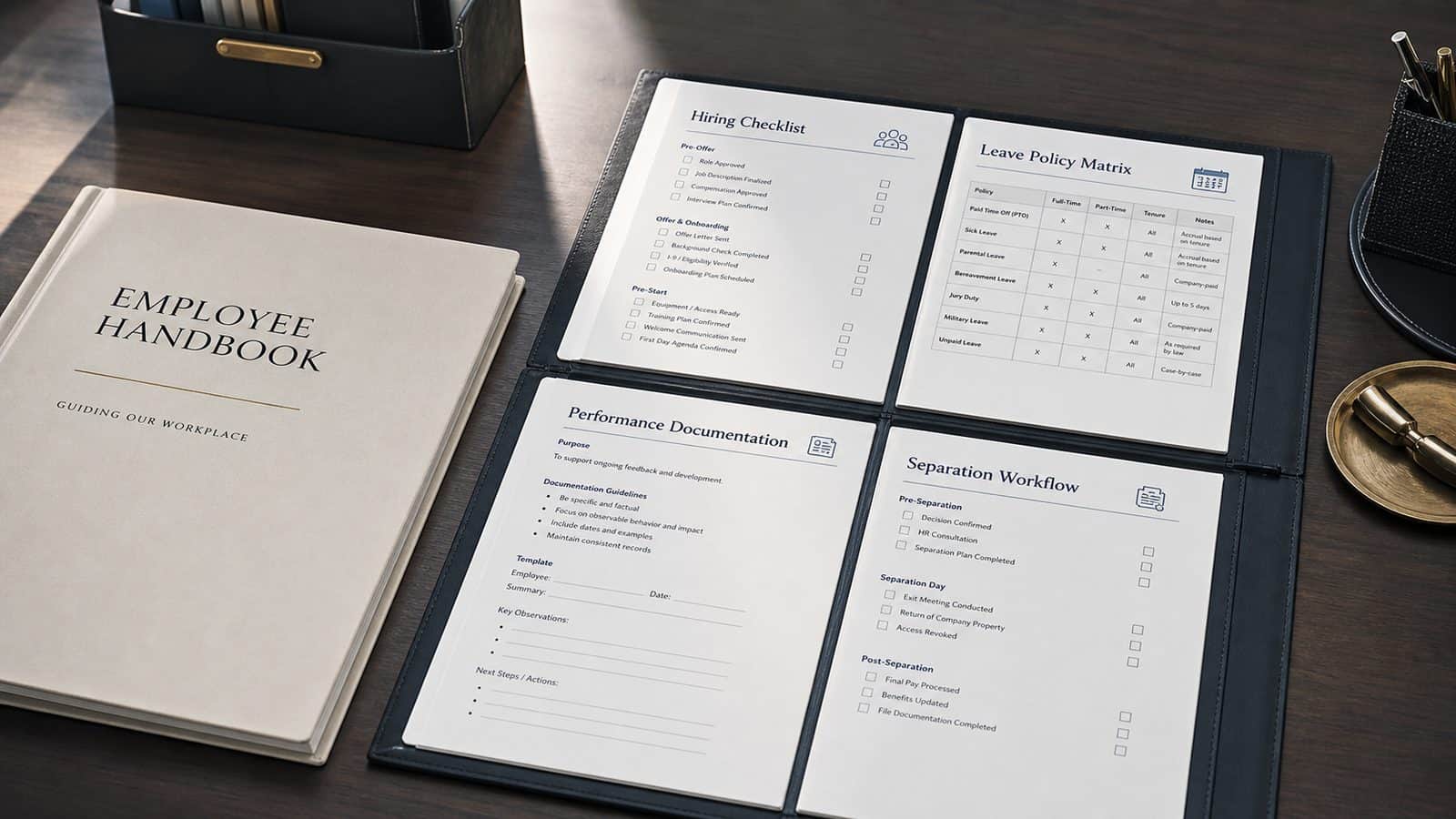
Almost every employment claim is won or lost before it is filed. Whether the handbook said what it needed to say. Whether the performance issues were documented. Whether the separation agreement was drafted properly and given the right amount of time to consider. Whether the person who made the decision wrote something down that they should not have.
That is the work on this page: getting those things right while they are still decisions rather than exhibits. It is considerably cheaper than the alternative, and it is the part most businesses skip.

What We Handle
Employee handbooks
Written to be legally sound and actually readable, then kept current as the law moves.
Offer letters and employment agreements
Including at-will language, compensation terms, and the provisions that matter when someone leaves.
Severance and separation agreements
Drafted for enforceability, including release language and the consideration periods the law requires.
Hiring and terminations
Process advice before the decision (documentation, timing, and the conversation itself).
HR policy and procedure
Discipline, performance management, leave, accommodation, and complaint-handling processes.
Restrictive covenants
Non-compete, non-solicitation, confidentiality, and IP-assignment terms drafted for Alabama.
Benefits and compensation
Benefit plan compliance, retirement plan administration, and the employment side of executive compensation.
Immigration
Work authorization and the employment-based immigration questions that come with hiring.
Workplace investigations
Internal investigations run properly, so the findings hold up if they are ever tested.
Sound familiar?
Why Advice From a Defense Litigator Is Different
Most employment advice is written by people who have never had to defend it. Our senior employment counsel spent four decades on the other end, defending discrimination claims, retaliatory discharge, workers' compensation, and wrongful termination suits, more than a hundred of them tried to judgment.
That changes the advice. When we tell you to document something, it is because we have watched a case turn on a document that did not exist. When we tell you a handbook provision is a liability rather than a protection, it is because we have seen it read back to a jury.
And when the claim comes anyway, the file is already built.
Who Does This Work

William R. Lancaster
Forty years defending employment claims, with a specialty in employment, HR, EEOC matters, and workers' compensation. Best Lawyers 2025 "Lawyer of the Year" for Workers' Compensation Law (Employers).

Jordan W Gerheim
Employment litigation and the advisory work around it, as outside chief legal counsel to companies across multiple industries.
The Six Documents Every Alabama Employer Should Have Current
Employee handbook
Sets expectations, establishes at-will status, and is the first thing requested in any claim.
Offer letters
Standardized and current, so compensation and at-will terms are not being improvised per hire.
Job descriptions
Accurate ones decide accommodation and essential-function questions before they become disputes.
Documented performance process
The difference between a defensible termination and a contested one is almost always the paper trail.
Separation agreement template
Drafted with proper release language and the consideration periods the law requires.
Restrictive covenant agreements
Enforceable in Alabama specifically. A template borrowed from another state frequently is not.
Not sure where your situation fits?
Related Services
Frequently Asked Questions
Can we fire someone for any reason in Alabama?
Alabama is an at-will employment state, which means employment can generally end at any time for any lawful reason, but "lawful" is doing a great deal of work in that sentence. You cannot terminate for a protected reason, in retaliation for protected activity, or in breach of a contract or policy you created. The at-will rule is a defense, not a license, and it is not much help if the file suggests a different reason.
How often should a handbook be updated?
At least every two years, and immediately after any material change in the law or in how you actually operate. The most dangerous handbook is not an out-of-date one. It is one that describes a process the company stopped following, because it will be read back as a promise you broke.
Do we need a separation agreement every time someone leaves?
No. They earn their keep where there is real risk of a claim, where you are paying severance, or where the departing employee had access to something worth protecting. Where they are used, drafting matters: a release that does not comply with the applicable requirements can be worth nothing while still costing you the severance.
An employee raised a complaint internally. What now?
Investigate it properly and promptly, and do not have it investigated by the person it concerns. How the investigation is run frequently matters more than what it finds. A well-run investigation with an uncomfortable outcome is far more defensible than a cursory one that clears everybody.
Do you handle it if this becomes a lawsuit?
Yes. Employment litigation sits under our Courtroom side, and it is the same firm and often the same attorney, so nobody has to be brought up to speed on the history. Litigation is billed separately from Partner Plans, at discounted rates for active Partner clients.
Related Insights
Before You Make the Decision, Not After
Book a Risk-Free Strategy Session. Send us the handbook, the offer letter, or the situation you are weighing. We will have read it before we speak.